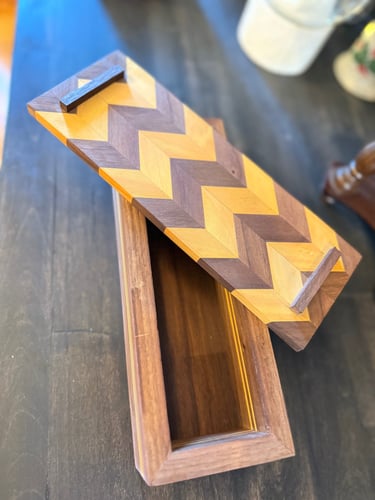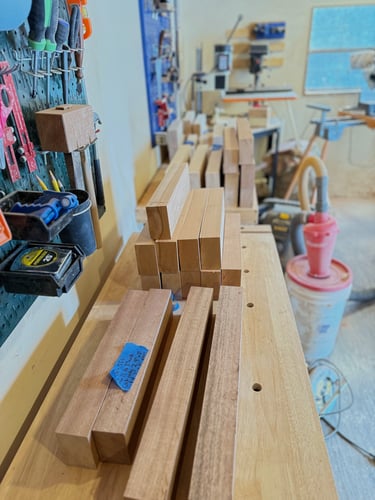
The work starts with an idea; a spark of inspiration that finds its way onto paper first, rough sketches that slowly start to speak the same language as the wood. From there, the materials choose themselves. The grain, the color, the weight of a particular piece of walnut or the boldness of a Purple Heart, it all starts to pull together into something that wants to exist.
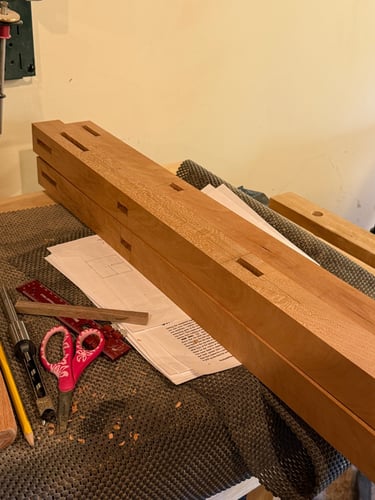
This is woodworking rooted in tradition; old world joinery, the quiet precision of Japanese technique, the fearless color and pattern of India, but it never feels like a history lesson. It feels alive. Those influences don't sit behind glass. They show up in the joints, the proportions, the way two pieces of wood come together without a single nail or screw to hold them.
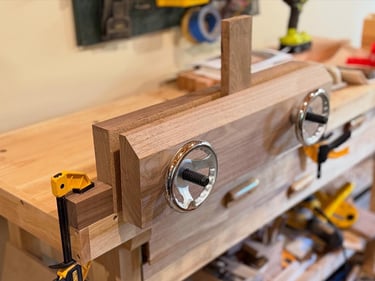
Hand tools slow you down, and that's the point. There's a conversation that happens between your hands and the material that machines can't replicate. You feel when something is right. You feel when it isn't.
The goal is never just a finished object. It's something that gets handed down — a board that gets seasoned by a thousand Sunday dinners, a table that holds the weight of a family for generations. Wood has memory, and so do the people who use it.
That's the whole thing, really. Make it well. Make it last. Make it mean something.